First bigger upgrades of 2026

Hey and good morning, dear friends and readers of this blog.

This morning after the usual

yay -Syu

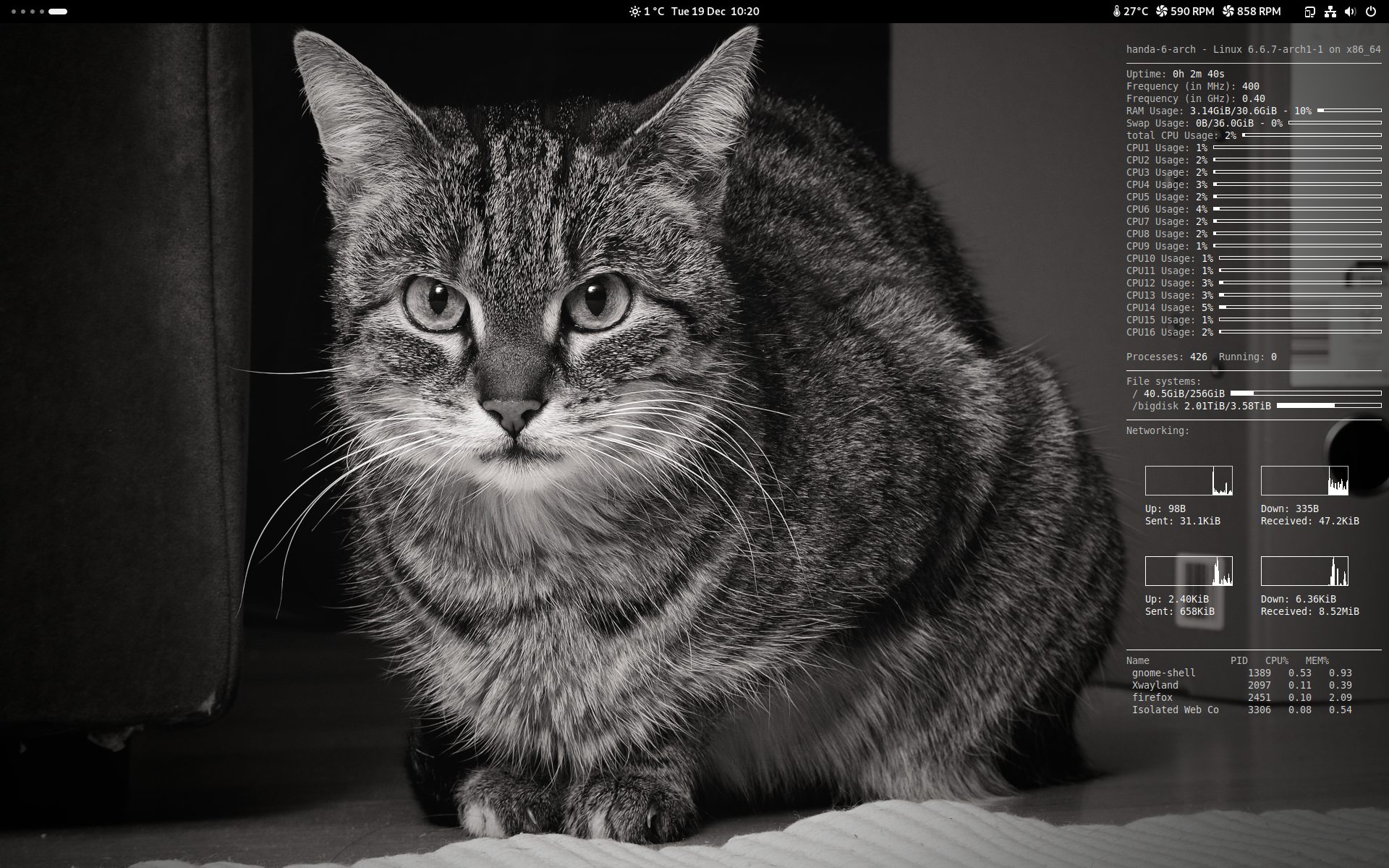
line in Arch, I got lots of updates, some 200+ packages IIRC, including a new kernel as shown in my conky as well:

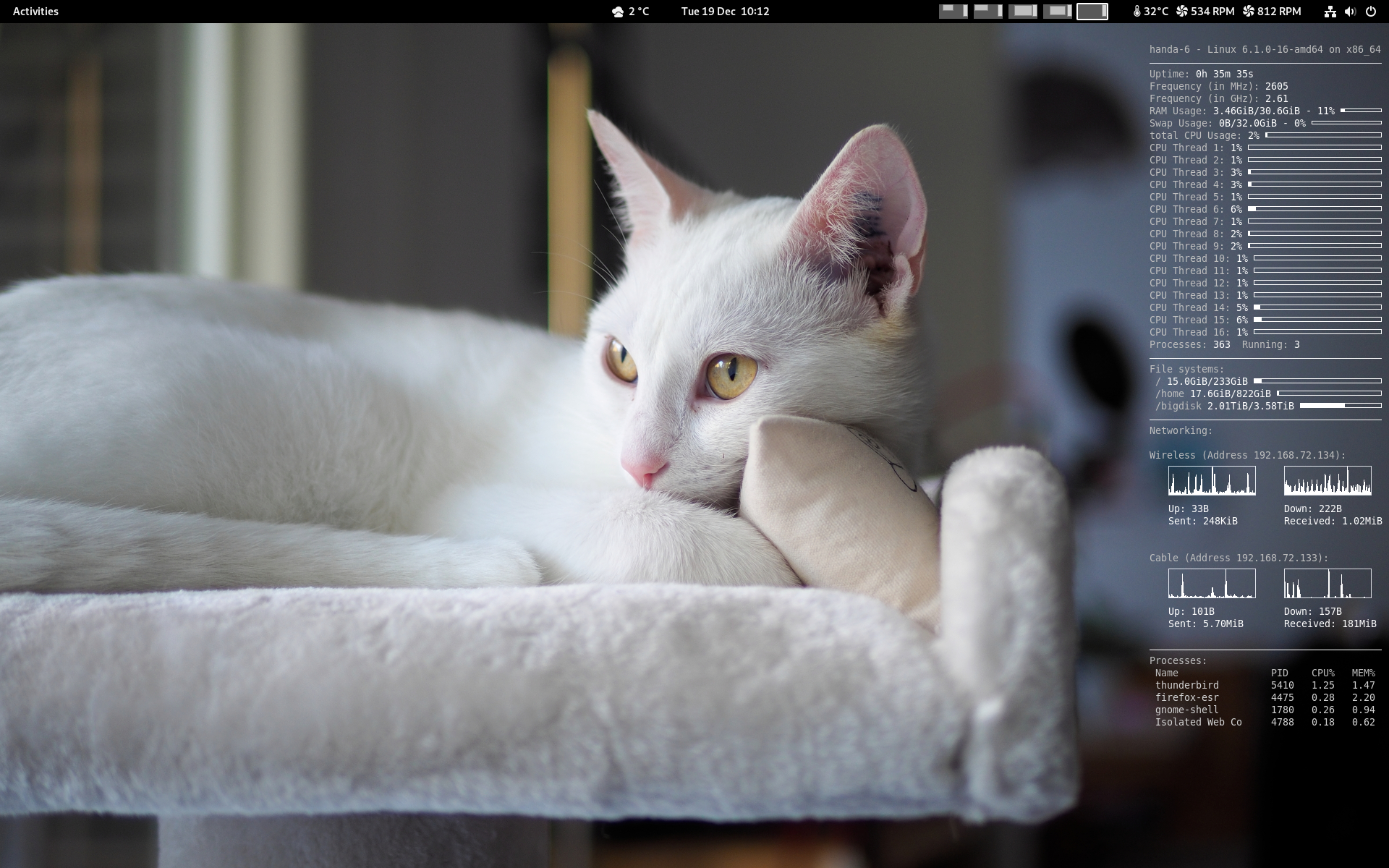
Later, I found this post from Marcus Nestor in 9to5 Linux about Debian – so I went and updated that as well, which also got me a new kernel amongst lots of other things:

What most people who aren’t that much into Linux probably don’t know is that it’s nowadays more and less automatic, like in Windows from versions 10 and upwards – you are notified about new updates, and often they come without much fuss, just by themselves. Lately I also read the old question again of when to reboot after such upgrades, and for me the answer is simple: whenever you get a new kernel or some other really low-level stuff like systemd or GRUB. Some distributions like Debian now automate updates via Gnome, which is a bit too much in my opinion – contrary to the later Windows versioning, this reboots pretty much each time instead of when really necessary. But I digress.

Marius’ article also mentions why and when you should probably download such upgrades – when making new boot images on your USB sticks or elsewhere. So while pretty much all modern distributions update themselves, and you don’t really need such downloads, if – like me – you’re carrying around a bootable stick with some of these images with you in case you’d need to help some friends with these, go for it and download those “point” distributions of monthly images (in Arch), and put them onto your boot media.

Oh, and in case you dual- or even triple-boot like me (yes, I still keep Windows 11 around as well), you’ll have to update your bootloader of choice of course – in my case, that is GRUB on Arch, like this:

sudo grub-install –target=x86_64-efi –efi-directory=/boot/ –bootloader-id=Arch

followed by

sudo grub-mkconfig -o /boot/grub/grub.cfg

as documented in the very nice Arch Wiki about GRUB. If you don’t do that, then you won’t see your new kernel in Debian ๐Ÿ˜‰

Like always, thanks for reading, and have a nice day ๐Ÿ™‚

Tried secureblue

Last week I had a brief look at secureblue, a hardened Linux distribution based on a so-called “atomicFedora distribution (called “silverblue” in case you’re interested). I was interested because I’ve read about it on several security-related websites like for instance here or here.

And I liked it a lot, becauise it takes many very good ideas from GrapheneOS, like their hardened Chromium-based browser Vanadium which here is called Trivalent. Even their webpages kind of look alike.

And since I haven’t had a look at a tiling window manager yet, I first tried the “Sway” version. With the <super> and <Enter> keys, you open a terminal window, here called “foot”. Looks like this:

You’ll notice the “us” keyboard, which I couldn’t switch to a German one, except in the login manager which looks like this:

This isn’t a problem of Sway; I later tried that with another distribution where it worked. Maybe some overlay “header” on Fedora’s version was responsible for this, I didn’t find out during my test.

I stopped testing it because neither this Sway nor the KDE Plasma or Gnome based versions of secureblue ran on Mitchie’s old Lenovo laptop which still has a Celeron-class dual core CPU, and only 2GB of RAM. Too heavy for old metal like that. I also can’t do all of my stuff (like music making which requires real time) on such an atomic version of Linux, and with flatpaks.

But in case you want a nice and reasonable secure machine, and have the hardware for it – I recommend a quad core with at least 4GB of RAM – then go for it, and have a look. Could be well worth trying it.

And like always, thanks for reading.
Memory loss, indeed

Oh wow – this means the end of an era, at least for me. We have Crucial memory in all of our desktop computers, and in each one I’ve built over the years. And now it will be gone, at least for us “consumers”. Why? The AI craze. And look at this:

A photo of the โ€œStargate Iโ€ site in Abilene, Texas. AI data center sites like this are eating up the RAM supply. Credit: OpenAI (taken from ARS Technica’s website)

That’s what AI – and as such, all of us – are doing to our planet. A lot less trees, a lot more datacenters. This has to stop if we really want to save the planet…

Like always, thanks for reading.
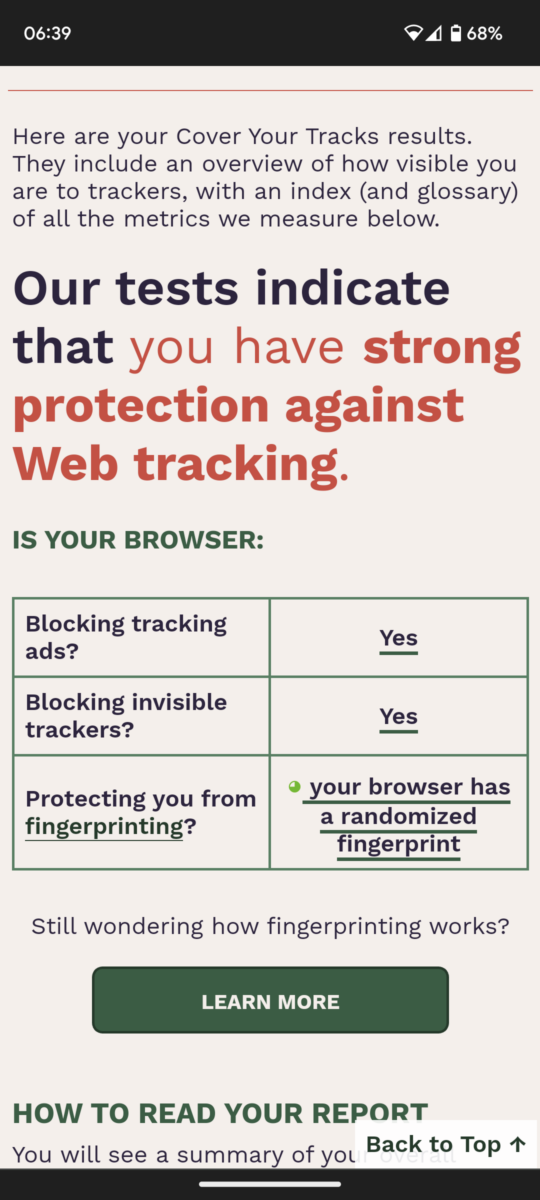
… and all of a sudden …

… conky is displayed in Arch again, just after login as expected:

I don’t actually know what happened, and what’s the cause that by now I don’t have to restart conky to be displayed (I used Brenden Matthews’ recommended one-liner ‘killall -SIGUSR1 conky’ to do just that until now). And I have to admit that even after all those years in Linux, I still don’t exactly understand Gnome’s initialisation process, with its ‘mutter’ (Gnome’s implementation of the Wayland display server) and so on. What I noticed was that I’ve got extension updates in Gnome, both in Debian as well as in Arch, but that was for the GSConnect extension, which shouldn’t have much to do with how the screen is rendered in my opinion – but as I said, what do I know?

Okay, time to re-edit my (closed by others) bug in Arch which I mentioned in my August post, and to also tell Brenden via Element/Matrix. I’m glad that it works now, even if I still don’t understand why.

And like always, thanks for reading.
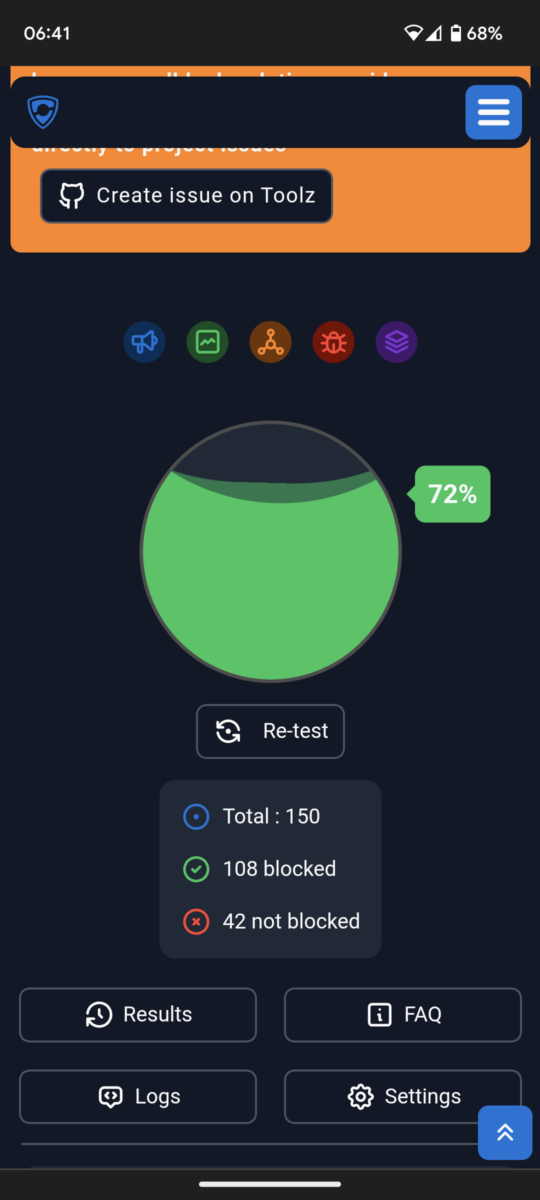
P.S.: Update, from less than half an hour later: after a few reboots and re-logins into Gnome on Arch, the behaviour is back to what it was before – meaning that conky is running (I see it with ‘ps waux | grep conky’, but I have to restart it with ‘killall -SIGUSR1 conky’ to have it displayed. Weird (as in fishes)…

And another update, from 2 days later: it worked again for the last two days, and I have no idea why (yet). But whenever I log into Arch, conky is there – displayed as it’s ought to be, like in the picture above. So this will be my last addendum on this case, except if I find out what caused all of this. So, like two days ago:

Thanks for reading.
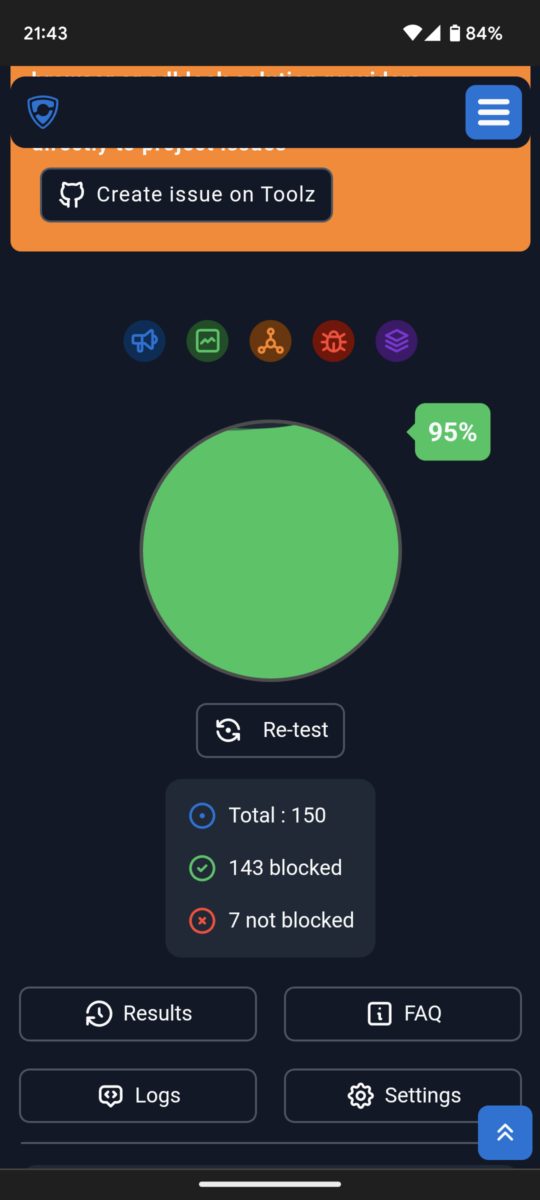
conky is running but not automatically displayed in Arch Linux since a while

I can reproduce that with a fresh install of Arch in a virtual machine. Gnome desktop and conky, with conky being put into autostart using the tweaks tool of the Gnome desktop. Have a look:

As the output of ‘ps’ shows, conky is definitely running, but it is not being displayed. Changing anything in its config, and then changing it back and saving that config makes it reload, and being displayed – same as if you ‘killall conky’ and reload it using the meta key and its icon.

Does not happen in Debian Trixie, but even with ps and pstree as well as Gnome Mutter’s ‘Looking Glass’ debugger I can’t figure out where the differences are. Happens only in Wayland, not when logging in using X.

Hints, anyone? Thanks ๐Ÿ™‚

Update, from Wed 6 Aug, 2025: filed a bug in Arch concerning this…

Hello Trixie – how nice to meet you!

Meet Trixie:

Ooops – not *this* Trixie ๐Ÿ˜‰ Although, as is well known, the Debian developers name their releases after characters from Toy Story, so this *is* Trixie. Enchantรฉ ๐Ÿ™‚

Well, as you can probably guess, I did it – approximately 3 weeks before the planned release date, and this time even one week before the planned deep freeze, I updated and upgraded my system according to the link in my last post which leads to the installation manual. Or, to make it a bit shorter, I did the following:

  • edited my /etc/apt/sources.list file, and
  • temporarily commented out any backports/updates lines until trixie will become stable
  • changed any other instance of the word ‘bookworm’ to ‘trixie’
  • saved that file
  • performed a sudo apt update, followed by – as suggested –
  • sudo apt upgrade –without-new-pkgs, and finally
  • sudo apt full-upgrade and
  • sudo reboot

Done. Simple as that. Oh, and after the reboot I also performed a sudo apt autoremove to get rid of some old stuff which isn’t needed anymore.

I had to exchange a Gnome extension for the weather to a newer one afterwards, but that was about it. Runs perfectly fine – but what else would you expect from Debian?

So here’s the output from fastfetch:

Still a happy user of Debian, after all those years… and thanks for reading.

Nice one :)

A user from Indonesia who calls himself “Fosslicious” has a nice video on YT showing how to make KDE on EndeavourOS look really good. I especially liked that analog clock ร  la Google of the “Utterly Sweet” theme he’s using in Plasma. Have a look:

Really a nice one – you’ll probably have to stop it a few times, as he’s going really fast through all these settings. But I never thought KDE could look that good ๐Ÿ˜‰

As always, thanks for reading & viewing.

Why I’m using both Debian *and* Arch Linux

Quick (TL:DR) answer: because both are great, both have their strengths and weaknesses, and both might be perfect for wholly different purposes.

So let me explain.

The upcoming Debian “Trixie” will have a kernel 6.12.something, while Arch has 6.15.7 while I’m writing this – might change real soon in a rolling release distribution. Likewise, Debian will have the ESR versions of Thunderbird and Firefox, while Arch will have the latest. Or let’s have a look at something for, say, composers – let’s choose musescore:

This was Arch, now let’s see Debian:

Ok, this is still “Bookworm”, so let’s see the packages site in a browser – same, musescore3. Same with other programs like Ardour, or for photographers, RawTherapee or Darktable.

So Debian packages are old, yes. That’s what makes Debian great for its stability, and this is something people like me often want. But on the other hand, creatives often want the latest and greatest, they might need the new features of the latest program versions…

… which is why I installed both. Simple. And free as in beer *and* as in free speech. ๐Ÿ™‚

Oh, and in case you’re a creative: what’s the “pro-audio” group in Arch is the “multimedia-all” in Debian, called the Debian Multimedia Pure Blend. Easy, and without any 3rd party repositories (like the very good kx.studio).

And like always, thanks for reading.